
Ukraine’s integration into the Single Euro Payments Area (SEPA) could make international transfers faster and more affordable for businesses while creating new opportunities for Ukrainian banks. However, joining SEPA will require legislative changes and upgrades to the country’s payment infrastructure. These challenges and opportunities were discussed during the second webinar hosted by Temenos and ProFIX Group on October 13, with the support of the Association of Ukrainian Banks (AUB).
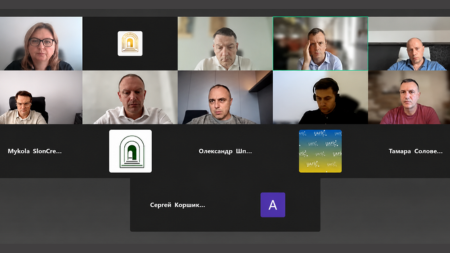
The webinar, “Preparing for SEPA and Beyond: How Ukrainian Banks Can Bridge the Payments and Compliance Gap,” continued a series of professional events focused on modern banking technologies.
The discussion featured Yevhen Kochkin, Executive Director of ProFIX Group and Chair of the AUB Committee on Payment Infrastructure and International Cooperation; Volodymyr Pryimak, Regional Director at Temenos; and Mick Fennell, Director of Payments at Temenos.
The webinar series is part of a partnership between Temenos and ProFIX Group, with the participation of Xpert Digital and the support of AUB.
SEPA: Faster and More Affordable Payments for Ukrainian Businesses
One of the central topics was the economic benefits of Ukraine joining SEPA, the Single Euro Payments Area.
Yevhen Kochkin emphasized that integration with European payment infrastructure could significantly reduce international transaction costs, accelerate settlements, and improve payment tracking.
“For Ukraine and Ukrainian businesses, joining SEPA is primarily about reducing payment processing costs. For banks, it means lower expenses and faster settlements, including reduced costs associated with payment investigations.For example, we are currently working with a bank on a situation where a payment travels through SWIFT to the first European bank and then enters SEPA, at which point visibility into its status is lost. SWIFT cannot track payments once they leave its network. At ProFIX Group, we are exploring the possibility of connecting to both SWIFT and SEPA to provide Ukrainian banks with end-to-end payment tracking. The key priority, however, is making payments faster.”
Participants explored the potential of SEPA Instant, which enables payments to be completed within 10 seconds, as well as opportunities for integration with other European payment systems.
For Ukrainian companies working with EU partners, these developments could improve cash flow, reduce transaction costs, and simplify cross-border payments.
What Ukraine Needs to Join SEPA
Participants identified several key priorities for Ukraine’s SEPA integration: preparing the necessary legislative framework, aligning banking infrastructure with European standards, and establishing an IBAN registry.
According to Yevhen Kochkin, the development of such a registry could influence the timeline for Ukraine’s technical readiness to join SEPA.
The discussion covered several possible approaches to creating the registry, including the involvement of public institutions, banks, and payment infrastructure providers. Representatives of the banking sector, AUB, and ProFIX Group have already developed proposals for its potential technical implementation.
The webinar highlighted the role of the AUB Committee on Payment Infrastructure and International Cooperation, whose activities include supporting Ukraine’s preparations for SEPA integration.
Participants were encouraged to become more actively involved in the Committee’s work to ensure that future integration mechanisms reflect banks’ operational needs.
Modernizing Payments: The Technologies Banks Need
Mick Fennell outlined the major trends shaping the global payments industry, including growing transaction volumes, the expansion of instant payments, the transition to ISO 20022, and the increasing use of artificial intelligence in banking operations.
He noted that the rapid development of digital financial services is intensifying competition between traditional banks, fintech companies, and emerging payment providers. At the same time, customers increasingly expect faster transactions and round-the-clock access to financial services.
“Our goal is to help our clients not only meet regulatory requirements in their respective countries but also improve efficiency through technologies that enhance business processes. This helps banks grow their businesses, expand their payment services, reduce operating costs, and manage risks more effectively. We are seeing continued growth in payment transaction volumes, while customers are becoming increasingly demanding. They expect payments to happen in real time.This puts additional pressure on payment systems and requires banks to rethink their approaches to scalability, operational efficiency, and data management.”
Modern payment infrastructure must support faster transaction processing, greater automation, and more advanced tools for managing risk and liquidity.
Artificial Intelligence in Payment Systems
A dedicated session explored the practical applications of artificial intelligence in banking and payment processing.
Mick Fennell highlighted four key areas where AI is being applied within Temenos payment solutions: fraud detection, automated payment repair, intelligent payment routing, and liquidity management.
These technologies can automate routine operations, accelerate transaction processing, and strengthen risk management.
Fennell discussed the emergence of agentic AI, which can independently perform specific tasks within banking workflows and interact with payment systems.
He also emphasized the importance of protecting customer data, ensuring algorithmic transparency, and maintaining regulatory compliance as financial institutions expand their use of AI.
Digital Euro and Tokenized Deposits: What Banks Should Prepare For
The webinar also addressed the future of digital money, including the digital euro, stablecoins, and tokenized bank deposits.
Mick Fennell pointed out that financial institutions need to prepare for an environment in which traditional and digital payment instruments operate alongside one another.
This will require technology platforms capable of processing different types of transactions, managing associated risks, and connecting to multiple payment networks.
He outlined how European financial institutions are preparing for potential digital euro pilot projects and discussed the prospects for its broader introduction.
Global Technology Solutions and Ukrainian Regulatory Requirements
Representatives of Temenos and ProFIX Group examined practical approaches to modernizing banking infrastructure.
The discussion focused on modular technology platforms that allow banks to upgrade payment systems gradually, integrate new services, and adapt solutions to domestic regulatory requirements.
Through its partnership with Temenos, ProFIX Group is working to adapt international banking technologies to Ukrainian legislation and the specific needs of the country’s financial infrastructure.
Mick Fennell emphasized that modern payment platforms should give banks the flexibility to adopt new technologies without having to undertake complex, large-scale replacements of their existing systems.
“We are working to modernize banks’ capabilities by building a platform that is easy to configure, with embedded AI-powered solutions, cloud architecture, APIs, and real-time transaction processing.This gives banks greater autonomy, enables them to implement necessary changes faster, supports secure system upgrades, and helps ensure compliance with financial industry standards.”
According to estimates presented during the webinar, a standard implementation of SEPA or SWIFT solutions supported by the platform may take between three and six months.
The actual timeline depends on the scope of the project, the integrations required, and the complexity of each bank’s existing infrastructure.