
Ukraine is moving closer to establishing a legal framework for the virtual assets market. Draft Law No. 10225-d, which the Verkhovna Rada has adopted in principle, is being prepared for its second reading. For banks and other financial institutions, this could open up the opportunity to legally work with virtual assets and integrate them into financial services.
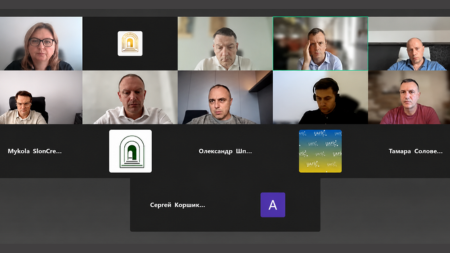
Representatives of the government, the banking sector, and the expert community discussed what exactly the future regulation will change, what opportunities it creates for banks and their customers, and how Ukraine is aligning its rules for working with virtual assets with European standards during the seminar “Regulation and Taxation of Virtual Assets: European Experience, Ukrainian Realities, and Prospects for the Development of the Banking Sector.”
The event is being held as part of the cooperation between the Association of Ukrainian Banks and the STEP IN 2 EU program and aims to bring the Ukrainian financial sector closer to European standards, enhance its competitiveness, and integrate it into the EU single market.
What Bill No. 10225-d Will Change
The bill defines the legal and tax framework for the virtual asset market, establishes requirements for service providers involved in the circulation of virtual assets, and sets out approaches to taxation.
The document is based on the provisions of the European MiCA Regulation, adapted to Ukrainian legislation. At the same time, the Ukrainian model takes into account national specificities, including civil law provisions, restrictions on the use of virtual assets as a means of payment, and circumstances related to martial law.
“The main part of the draft law is the transposition of MiCA provisions, taking into account the specifics of the Ukrainian market. The rest covers national specifics: civil law provisions, restrictions on the use of virtual assets as a means of payment, and provisions related to martial law,” explained Dmytro Nikolaevsky, chief legal counsel at the Project Office for Digital Economy Development of the Ministry of Digital Transformation of Ukraine.
One of the key outcomes of establishing a regulatory framework will be the ability for banks and financial companies to officially work with virtual assets. For customers, this will mean the ability to manage their digital assets through the financial institutions they are familiar with—where they already have accounts, payment cards, deposits, or loans.
“The creation of a regulatory framework, which everyone in Ukraine is currently awaiting, will allow banks and financial companies to officially and legally work with virtual assets,” said Ruslan Kostetsky, Head of Development and International Relations at the Association of Ukrainian Banks.
What Opportunities Will Open Up for Banks
The introduction of clear regulations, in addition to the legalization of transactions involving virtual assets, creates opportunities for the development of new financial products. One of the most obvious areas is payments and money transfers using stablecoins, noted Serhiy Khodakevych, Ph.D. in Economics, professor in the Department of Banking and Insurance at the Kyiv National Economic University, and advisor to the President of the Association of Ukrainian Banks.
“The introduction of stablecoins reduces the cost of transfers and speeds them up. This, in turn, benefits all bank customers, both individuals and legal entities,” he said.
According to him, these advantages can be particularly noticeable in cross-border transactions. Compared to traditional money transfers, digital transactions can be faster, cheaper, and more transparent.
At the same time, the potential of virtual assets is not limited to payments and exchange transactions.
Serhiy Kozlov, Ph.D. in Economics and a DeFi expert at the international company Blockstream, noted that once clear rules are established, users will be able to exchange certain stablecoins for fiat currency, purchase digital assets, and manage them.
Among the possible areas of application, he also mentioned lending—specifically, the use of digital assets as collateral for loans.
Thus, virtual assets could potentially be gradually integrated into the traditional financial system—from payments and exchanges to credit products.
What Regulation Should Look Like
Future regulations must take into account the practical experience of those who will be working with virtual assets, noted Tetiana Dmytrenko, chair of the board of the NGO “Ukrainian Modern Digital Science.”
“For regulatory standards to be effective, the government and the private sector must work together. It is also important to involve the crypto community and banking institutions that will be directly engaged with this market. Such collaboration is essential for protecting investors’ rights and combating the use of virtual assets in criminal activities.”
The Association of Ukrainian Banks will continue its professional dialogue on the development of the virtual assets market. In particular, the AUB plans to hold thematic meetings, develop relevant training programs at the Banking Academy, and conduct surveys of the banking sector to determine next steps.
About the Project:
The event “Regulation and Taxation of Virtual Assets: European Experience, Ukrainian Realities, and Prospects for the Development of the Banking Sector” is organized by the Association of Ukrainian Banks as part of the STEP IN 2 EU international cooperation program, which is co-financed by the governments of Germany and Norway, the European Union under the EU4Business initiative, and the governments of Lithuania and Estonia. The program is implemented by Deutsche Gesellschaft für Internationale Zusammenarbeit (GIZ) GmbH. The program aims to support Ukrainian state institutions in advancing the EU accession process in economic areas, as well as to create better economic conditions and financial opportunities for Ukrainian companies, enabling them to benefit from integration into the EU single market.