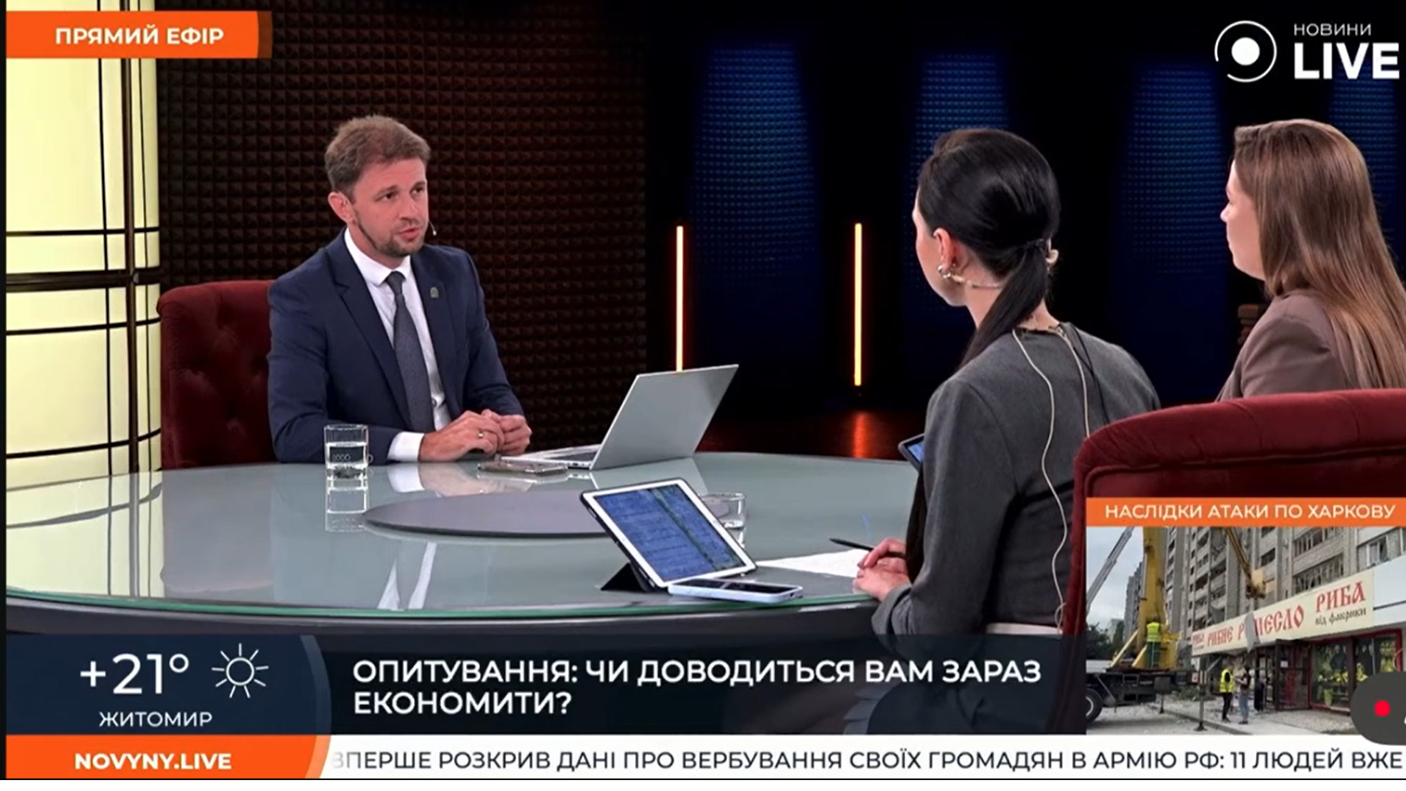

The Ukrainian banking system remains stable even amid intensifying Russian attacks on businesses and logistics infrastructure. As of July 1, 2026, the share of non-performing loans had fallen to 12.5%, and 97% of these loans are already covered by reserves. Andriy Dubas, President of the Association of Ukrainian Banks, discussed this on the “Kyiv-24” television channel.
According to Andriy Dubas, the Ukrainian banking sector entered the full-scale war significantly better prepared for crisis scenarios thanks to reforms that have been underway since 2014. These reforms included stricter capital requirements for banks, as well as increased oversight of their operations and the sources of their funds.
“Starting in 2022, our banking system has been very well prepared and remains prepared for stress scenarios,” noted the AUB President.
95% of non-performing loans are already covered by reserves
Andriy Dubas cited the level of provisions for non-performing loans as one of the key indicators of the banking system’s stability.
Today, 95% of all non-performing loans in the banking sector are covered by established reserves. This means that banks have already accounted for the bulk of potential losses on such assets in their balance sheets.
The second important indicator is the share of NPLs in the loan portfolio. As of July 1, 2026, it stood at 12.5%.
According to the AUB President, this is one of the lowest figures for the Ukrainian banking system in recent decades. During previous periods of crisis, the share of non-performing loans reached 20–30%, and in some years—40–50%.
“Today, the ratio of non-performing loans in Ukraine has fallen to 12.5%. Given that the country is facing a full-scale invasion, this is a fairly low figure.”
Attacks on logistics warehouses are affecting certain loans
During the broadcast, the participants also discussed the consequences of Russian attacks on logistics centers, retail chain warehouses, postal operators, and other Ukrainian companies.
Such facilities are often built and modernized with bank financing. Their destruction causes direct losses for businesses and may complicate the servicing of certain loans. At the same time, the share of such loans in banks’ total loan portfolios remains insignificant.
“This will have an impact on the banking sector, but it will not have a drastic or critical impact. The share of this problem in the entire loan portfolio is extremely low.”
In his assessment, current liquidity indicators and the quality of the loan portfolio provide no grounds for expecting a systemic crisis in the banking sector. Banks have the resources to continue lending to the economy, although security risks continue to hold back the pace of its growth.
Ukraine Needs Broader Instruments for Insuring Against War Risks
Andriy Dubas identified the development of mechanisms to insure businesses against war risks, with the participation of international partners, as a separate area of focus.
Such instruments can help companies receive compensation for destroyed property and resume operations more quickly following Russian attacks.
The AUB President also called on companies whose assets were destroyed or damaged as a result of Russian strikes to systematically document the losses incurred. This is necessary for future claims for compensation from the aggressor state.
“We need to work on tools to protect against military risks. This will allow us to quickly pivot and rebuild destroyed facilities in the future.”
According to the AUB President, the resilience of the banking system today allows us to focus on the next task—expanding lending to the economy and creating effective mechanisms to protect businesses from military risks.