
Ukrainians are increasingly turning to consumer loans to cover their daily expenses until their next paycheck. This trend is highlighted in a study of the consumer lending market conducted by the Association of Ukrainian Banks.
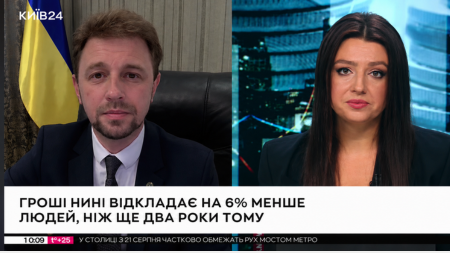
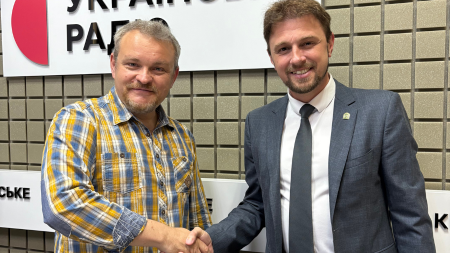
Andriy Dubas, President of the Association of Ukrainian Banks, discussed this on the NoVyny.LIVE broadcast.
This is the second time the AUB has studied the consumer lending market among banks and non-bank financial institutions. The results show an increase in the share of funds that Ukrainians are borrowing for daily needs.
“We are seeing an increase in the share of consumer loans that people use for current needs—for example, when they don’t have enough money to last until payday. People use their credit limit and then repay the debt after receiving their income,” noted Andriy Dubas.
According to him, such financial instruments help people bridge short-term cash gaps between regular income streams.
The AUB president emphasized the need to assess the purpose of the loan and one’s own ability to meet obligations.
“Before taking out a loan, it’s important to assess what the funds are needed for, whether the person has a stable source of income, and whether they will be able to meet their obligations on time.”
The credit limit depends on the customer’s financial behavior
The bank determines the credit limit on a case-by-case basis. The decision is influenced by the customer’s financial profile, income, and payment history.
“The bank evaluates each borrower individually and, depending on their financial profile, may set a credit limit of 50, 100, 200, or even 500 thousand hryvnias.”
Failure to meet payment deadlines may result in a reduction of the credit limit or even its closure. Such information is also reflected in the credit history and influences future decisions by financial institutions.
What You Should Know About 0% Installment Plans
A separate topic of discussion was the 0% installment plans offered by banks and retail chains.
According to Andriy Dubas, requirements for disclosing the true cost of financial services have become significantly stricter in recent years. The National Bank monitors the information on interest rates, fees, and terms that banks and financial companies provide to customers.
“Today, customers can see the true cost of a loan even before they apply for it. Financial institutions’ websites feature calculators where you can enter the amount and term and immediately see the total overpayment.”
Installment plans may involve dividing the purchase price into several payments without additional interest for the customer. The costs associated with such a plan may be covered by the seller. They may also be factored into the price of the goods.
Adherence to the payment schedule remains a key condition.
“If the customer makes all payments on time, there may be no additional overpayment. In the event of a delay, the terms specified in the contract take effect, including a higher interest rate.”
When Ukrainians Turn to Microcredit
The AUB president also commented on the role of microcredit. Such loans are typically for small amounts and have short terms.
“Microcredits usually involve a small amount—about 3,000 to 5,000 hryvnias—and a short repayment period. It is a financial instrument used by a relatively small proportion of consumers,” said Andriy Dubas.
According to the study, about 10–15% of consumers use such services.
Among the reasons for turning to microcredit companies, he cited the need to quickly obtain a small amount of money and limited access to bank financing due to credit history.
“One typical scenario is when a person urgently needs a small amount of money but, due to their credit history, does not have access to a bank credit line. In such cases, a microloan can meet a short-term financial need.”