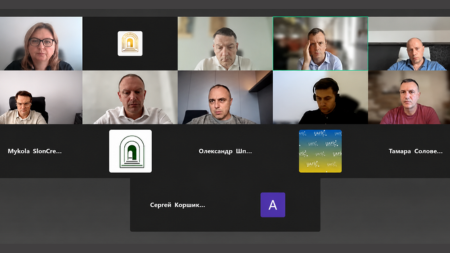

On June 24, 2026, the Association of Ukrainian Banks held a joint meeting of the Compliance and Financial Monitoring Committees, attended by representatives of banks, non-bank financial institutions, and financial market participants.
The meeting focused on practical issues that are currently of great importance to the market: the implementation of the Memorandum on Ensuring Transparency in the Operation of the Payment Services Market; issues related to “drops” and “drop accounts”; the use of open data and technological solutions to identify risk patterns; and the practices of primary financial monitoring entities in dealing with shell companies, taking into account the recommendations of the National Bank of Ukraine.
During the first session, participants examined the practical aspects of implementing the Memorandum. Particular attention was paid to the market’s transition from mechanical restrictions to a more mature risk management model that takes into account the client’s risk profile, financial capacity, operational behavior, client connections, and the economic rationale behind transactions.
During the discussion, it was emphasized that the Memorandum should not be viewed solely as a document setting limits. Its practical significance lies in establishing a common market framework for banks and non-bank financial institutions regarding payment market transparency, proper customer due diligence, transaction monitoring, anti-fraud controls, and a risk-based approach.
A separate segment of the meeting was devoted to the issues of “drops,” “drop accounts,” and shadow financial networks. Participants discussed how the risk posed by “drops” is no longer limited to traditional personal bank accounts. It can manifest through sole proprietorships, small businesses, and newly established or “dormant” legal entities.
In this context, the need to look beyond a single transaction or account to a broader risk model was emphasized: the customer, their behavior, connections, economic rationale, external profile, and potential involvement in a financial network.
Participants were also introduced to approaches for using open data as a tool to improve the quality of customer due diligence, analyze connections, identify risk indicators, “dormant” entities, and potential shell companies. The role of technological analytics, behavioral patterns, risk signals, and automated solutions in identifying drop networks and related financial models was discussed separately.
The Committee noted that technological solutions should not replace a responsible employee or automatically serve as grounds for restricting a customer. Their role is to provide an analytical foundation, identify risk signals, prioritize cases, and support financial monitoring, anti-fraud, and compliance processes.