
The Analytical Center of the Association of Ukrainian Banks has released its monthly review of key indicators of the banking system as of May 1, 2026. Analysis of the data shows that despite inflationary pressures and currency fluctuations at the beginning of the year, the banking sector remains stable, continues to lend to the economy, attract customer funds, and increase the volume of active operations.
Inflation and Monetary Policy: Challenges at the Start of the Year
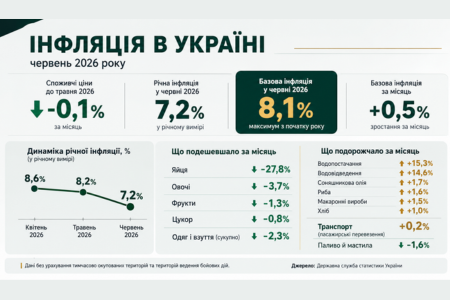
Following a significant slowdown in inflation in the second half of 2025, the economy faced a new wave of price pressures at the start of 2026. While annual inflation stood at 7.4% in January, it reached 8.6% by April and slowed slightly to 8.2% in May.
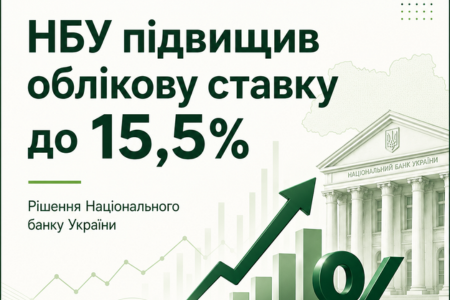
At the same time, the National Bank of Ukraine continued its policy of containing inflationary risks by keeping the discount rate at 15%.
It was under these conditions that banks adapted their business models, maintaining lending activity and a sufficient level of liquidity.
Banks Are Withdrawing Liquidity from NBU Deposit Certificates
One of the most telling trends at the start of the year was a significant reduction in the volume of NBU deposit certificates held in banks’ portfolios.
As of January 1, 2026, banks held 772 billion UAH in National Bank deposit certificates. By May 1, this figure had fallen to 662 billion UAH. Thus, over the course of four months, the banking system reduced its investments in this instrument by 110 billion UAH.
The largest reduction was recorded among privately owned banks (–64.8 billion UAH). Banks belonging to foreign banking groups reduced their investments by 23.4 billion UAH, while state-owned banks reduced theirs by 21.9 billion UAH.
The AUB Analytical Center notes that this trend indicates a gradual release of liquidity and its redirection toward other areas—primarily lending to the economy and investments in government securities.
Corporate lending is growing at the fastest pace
Business lending remains one of the key drivers of banking activity.
In the first four months of 2026, the gross loan portfolio for corporate clients grew from 878.5 billion UAH to 942.6 billion UAH. The total increase amounted to 64.1 billion UAH.
April was particularly telling, as the corporate loan portfolio increased by nearly 25 billion UAH in just one month. This indicates a recovery in business demand for bank financing following a period of heightened uncertainty at the beginning of the year.
Banks with state ownership made the largest contribution to the growth in corporate lending, adding 25.8 billion UAH. At the same time, private banks nearly caught up with them, posting an increase of 22.3 billion UAH, which reflects their active engagement with small and medium-sized businesses. Banks belonging to foreign banking groups increased their corporate portfolio by 16 billion UAH.
Public demand for loans remains high
The retail segment is also showing steady growth.
Since the beginning of the year, the retail loan portfolio has grown from 341.9 billion UAH to 374.3 billion UAH. The increase amounted to 32.4 billion UAH.
Growth occurred every month without any periods of decline, indicating stable consumer demand for credit products even amid martial law and economic uncertainty.
The largest increase in consumer lending came from state-owned banks (UAH +15.3 billion) and privately owned banks (UAH +14 billion).
The quality of loan portfolios continues to improve
Despite active lending, the quality of portfolios continues to improve.
In the retail lending segment, the share of non-performing loans (NPLs) decreased from 10.8% at the beginning of the year to 10.4% as of May 1.
In the corporate segment, the ratio fell even more significantly—from 16.8% to 15.2%.
A particularly noticeable improvement is observed at banks belonging to foreign banking groups, where the level of non-performing debt in the corporate portfolio fell to 5.8%.
According to the AUB Analytical Center, these trends indicate both effective risk management by banks and a gradual improvement in borrowers’ financial condition.
Banking System Assets Exceeded 4 Trillion UAH
As of May 1, 2026, the total volume of banks’ net assets stood at 4.05 trillion UAH, an increase of 44.7 billion UAH compared to the beginning of the year.
Banks belonging to foreign banking groups (+30.1 billion UAH) and banks with state ownership (+16 billion UAH) showed the largest growth in assets.
Following the currency turmoil in March, the banking system quickly restored its liquidity levels and returned to growth, which became one of the key indicators of its resilience.
Ukrainians Are Diversifying Their Savings Between Foreign Currency and Banking Instruments
One of the most interesting trends at the start of the year was the public’s behavior in the financial market.
From July 2025 through May 2026, the public’s net demand for foreign currency cash exceeded 264 billion UAH. In March alone, Ukrainians purchased foreign currency worth a record 104.9 billion UAH.
At the same time, this did not lead to an outflow of funds from the banking system. On the contrary, the deposit portfolio of individuals has increased by 22.5 billion UAH since the beginning of the year—to 489.4 billion UAH.
The AUB Analytical Center emphasizes that this trend does not indicate a loss of confidence in banks, but rather reflects citizens’ desire to diversify their savings across various financial instruments.
Banks remain one of the key buyers of government bonds
As of May 1, 2026, the banking system’s investments in domestic government bonds totaled 938 billion hryvnia.
During the first months of the year, private banks increased their investments in domestic government bonds by 11.1 billion UAH, while banks belonging to foreign banking groups increased theirs by 11 billion UAH.
At the same time, state-owned banks reduced their portfolio by 15.7 billion UAH. According to AUB analysts, this may be due to the need to free up liquidity for more active lending to businesses and households.
In this way, the banking system simultaneously supports the state budget and finances economic activity.
Households and Businesses Invest Their Funds Differently
In the first four months of the year, the deposit portfolio of individuals grew by 22.5 billion UAH, while deposits from legal entities increased by only 7.6 billion UAH.
At the same time, the largest increase in household deposits came from privately owned banks (+10.8 billion UAH), while corporate clients were more active in placing funds in state-owned and foreign banks.
These trends indicate different behavioral patterns among households and businesses amid economic uncertainty.
The banking system continues its digital transformation
As of April 1, 2026, there were 58 banks operating in Ukraine, down from 60 at the beginning of the year.
At the same time, the number of branches decreased by 37 to 4,776.
The largest branch networks are traditionally concentrated in Kyiv, Dnipropetrovsk, and Lviv regions.
According to AUB analysts, this trend reflects the continued development of remote service channels and the digitization of banking services.
The banking sector remains profitable
For the period from January through April 2026, the banking system’s net profit after taxes amounted to 34.8 billion UAH.
Banks with state ownership made the largest contribution, generating over 21 billion UAH in profit. Banks belonging to foreign groups earned 7.2 billion UAH, while privately owned banks earned 6.5 billion UAH.
At the same time, only 11 of the 58 operating banks remained unprofitable, indicating the sector’s overall financial stability.
Key Findings of the AUB Analytical Center
Based on an analysis of banking system indicators for the first four months of 2026, the AUB Analytical Center identifies several key trends:
banks are reducing the amount of funds held in NBU deposit certificates and are more actively channeling resources into the economy;
lending to businesses is growing faster than lending to households;
the corporate sector is demonstrating steady demand for bank financing;
the quality of loan portfolios continues to improve;
the banking system maintains a high level of profitability;
households are simultaneously increasing both their foreign currency savings and bank deposits;
banks remain an important source of financing for the state budget through the government bond market;
the banking sector is demonstrating its ability to support economic activity and finance Ukraine’s recovery even amid the war.
According to the AUB Analytical Center’s assessment, these trends collectively indicate a gradual strengthening of the banking system’s role as one of the key mechanisms for financing the economy, supporting businesses, and ensuring Ukraine’s future recovery. Read the full report here.