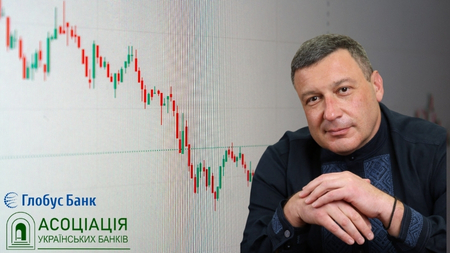

The hryvnia exchange rate is likely to remain relatively stable through the end of 2026, although the trend toward depreciation may continue. According to a forecast by Andriy Dubas, president of the Association of Ukrainian Banks, the dollar may fluctuate between 44.90 and 45.10 UAH. He made this statement during an appearance on Suspilne.
According to him, at the end of summer, Ukraine’s foreign exchange market is traditionally influenced by seasonal factors related primarily to the agricultural cycle, exports, and foreign currency inflows.
At the same time, in 2026, external factors—in particular, the situation in the Middle East and rising energy prices—significantly affected the traditional seasonal patterns.
“There have been certain changes this year. The war in the Middle East created unexpected demand for foreign currency and fuel and lubricants in the first and second quarters. In fact, we did not see the strengthening of the hryvnia that was traditionally expected by mid-summer,” noted the AUB President.
What the Exchange Rate Might Be by the End of the Year
Andriy Dubas expects that the hryvnia may gradually weaken by the end of the year, but there are currently no conditions for a sharp devaluation.
“By the end of the year, we may see fluctuations in both directions. If we look at the trend since the beginning of the year, my forecast is that the exchange rate could fluctuate between 44.90 and 45.10 hryvnia per dollar by the end of this year.”
The AUB President cited the continuation of international financial support for Ukraine as one of the key factors for currency market stability.
This refers to both funding from international partners and cooperation with the International Monetary Fund.
“It is very important for the exchange rate that Ukraine receives the external financial assistance contracted by our international partners. Equally important is Ukraine’s continued participation in the program with the International Monetary Fund.”
According to him, the continuation of the IMF program is an important signal to Ukraine’s other international creditors and partners, as it demonstrates the country’s maintenance of macrofinancial stability and fulfillment of its commitments.
International reserves enable the NBU to curb sharp fluctuations
During the discussion, special attention was paid to Ukraine’s international reserves. In early August, they exceeded $50 billion.
Andriy Dubas noted that reserves had been declining throughout the spring amid external economic risks and a sharp rise in global oil prices. At the same time, the situation gradually stabilized, and reserves began to grow again.
“What does this mean for Ukrainians? Today, the National Bank has the ability to use its international reserves to curb sharp fluctuations in the exchange rate.”
He recalled that the current level of reserves significantly exceeds the figures Ukraine had when it entered the crisis period in 2014.
“Today, this is a good indicator for Ukraine. It gives us reason to say that the National Bank has significant leverage to prevent sharp fluctuations in the exchange rate.”
The fall and winter period will remain a risk factor
Among the challenges facing the Ukrainian economy in the coming months, Andriy Dubas also cited potential additional costs for energy resources and the restoration of damaged infrastructure.
That said, Ukrainian businesses and the general public now have significantly more experience dealing with power outages than they did at the start of the full-scale war.
“This isn’t the first winter we’ve lived through amid a full-scale invasion. Over the years, businesses, organizations, and households have prepared themselves to a large extent—they’ve purchased generators, batteries, and other equipment.”
At the same time, the greatest risk remains large-scale damage to critical infrastructure, particularly heating and water supply systems in major cities.