
In the second half of the year, despite a number of risks—inflation, exchange rate volatility, the impact of the war, import costs, the need for foreign exchange interventions, and dependence on international aid—the banking sector has all the prerequisites to remain stable and reasonably predictable.
With an effective monetary strategy from the National Bank, banks will continue to operate in a predictable environment. This will help maintain attractive interest rates on hryvnia deposits and support the further development of key lending segments.
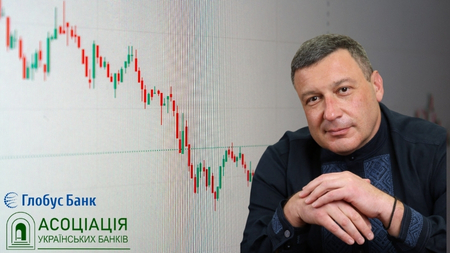
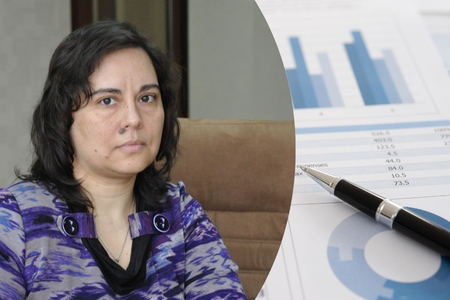
This view was expressed by Serhiy Mamedov, vice president of the Association of Ukrainian Banks and chairman of the board of GLOBUS BANK.
The banker believes that inflation will remain one of the main factors affecting the banking system in the second half of the year. Its dynamics will largely determine the National Bank’s future decisions regarding the discount rate and, consequently, will influence the cost of funds for banks, deposit yields, and opportunities for lending growth.
He noted that, as of the end of May, inflation in Ukraine stood at 0.9% on a monthly basis, while the annual rate slowed to 8.2%. In his view, this still represents significant price pressure, though it is lower than in April, when annual inflation stood at 8.6%. He forecasts that in the second half of the year, barring any new price shocks, inflation could reach 8–9% on an annual basis, which is generally in line with the NBU’s projections.
“The National Bank will have grounds to maintain a cautious but relatively stable monetary policy. This will mean minimal risks of sharp changes in deposit rates, greater predictability in the cost of funds, and better conditions for a gradual expansion of lending,” the banker emphasized.
The situation on the fuel market will be an important factor.
He noted that from March through May, the average price of A-95 gasoline rose from 62.87 UAH/liter to 75.94 UAH/liter, or by approximately 20.8%. During this period, diesel fuel rose in price from 62.69 UAH/liter to 86.05 UAH/liter, or by about 37.3%. At the same time, trends diverged in May: A-95 continued to rise in price, adding 3.55 UAH/liter to its April level, while diesel, following a previous increase, fell by 2.02 UAH/liter.
“The situation on the fuel market is of fundamental importance to the banking sector, as fuel costs affect the cost of doing business, logistics, borrowers’ solvency, and consumer prices. If the fuel market avoids further sharp spikes in the second half of the year, the overall situation will remain more or less predictable. The National Bank will not tighten monetary policy, and banks will be able to continue offering customers attractive terms for both savings and loans,” the banker noted.
International financial support for Ukraine will be another important factor. Funds received from partners—particularly as part of the EU’s €90 billion loan package for Ukraine for 2026–2027—will be crucial not only for budgetary stability but also for the entire financial system.
“Regular external financing enables the state to meet social, defense, and other critically important expenditures in a timely manner, supports international reserves, and reduces the risks of excessive pressure on the foreign exchange market,” noted the head of GLOBUS BANK.
The third systemic factor will remain the war. The destruction of energy, manufacturing, and logistics infrastructure directly affects the operations of enterprises, business costs, the need for working capital, and investments in their own energy resilience.
“Every day, the war creates new risks and challenges for the economy, and the banking sector cannot exist in isolation from the realities of the damage inflicted by the enemy. However, banks have already proven that they are capable of operating effectively even under extremely challenging conditions. Therefore, our task for the second half of the year is not only to maintain reliability and trust but also, to the extent possible, to expand financial opportunities for citizens and businesses,” emphasized Serhiy Mamedov.
Deposit Yields
According to Serhiy Mamedov’s assessment, given the National Bank’s balanced monetary strategy, there will be no drastic changes in the deposit segment during the second half of the year. Banks will continue to be interested in attracting hryvnia deposits from the public, so rates will remain quite attractive.
The average yield on hryvnia deposits is expected to be:
for 6 months — about 14.5% per annum;
for 9 months — about 14% per annum;
for 12 months — about 14.5% per annum.
At the same time, at certain banks, maximum rates under special deposit offers may exceed the market average.
“It is quite possible that hryvnia deposits will remain one of the most straightforward savings instruments for citizens. Depositors can lock in a rate of return for a fixed term without taking on excessive risk. This is especially true for 6- to 9-month deposits, which combine a fairly high rate of return with acceptable flexibility,” the banker noted.
Will Hryvnia Deposits Remain Profitable?
According to the expert, the viability of hryvnia deposits in the second half of the year will depend on two key indicators: actual inflation and exchange rate trends.
At the same time, he emphasized that for citizens who want to retain the ability to access their funds more quickly, 6- to 9-month deposits may be the best option. For those willing to lock in returns for a longer term, one-year deposits can provide a greater financial cushion in the event of a moderate weakening of the hryvnia.
The banker cited thresholds beyond which hryvnia deposits may lose their advantage relative to inflation or foreign currency purchases.
6-Month Deposit
At an average annual rate of 14.5%, the depositor’s net return after taxes will be approximately 5.6% over the entire term of the deposit. Hypothetically, such a deposit will begin to lose its real return if cumulative inflation over 6 months exceeds 5.6%. If we compare it to purchasing dollars at an initial exchange rate of approximately 45 UAH/$, the foreign currency alternative will match the deposit if the exchange rate rises to about 47.52 UAH/$.
9-Month Deposit
At an average annual interest rate of 14%, the net return after taxes will be approximately 8.1% over the term of the deposit. Accordingly, such a deposit will lose its real return if cumulative inflation over 9 months exceeds approximately 8.1%. Compared to the foreign currency alternative, the threshold exchange rate for the dollar will be approximately 48.65 UAH/$.
12-Month Deposit
At an average annual interest rate of 14.5%, the depositor’s net return after taxes will be approximately 11.2% per year. Therefore, a one-year deposit will begin to lose its real return if annual inflation exceeds approximately 11.2%. If compared to buying a dollar at an exchange rate of about 45 UAH/$, the currency alternative will become equivalent to the deposit only if the exchange rate rises to approximately 50.04 UAH/$.
“The math behind deposits in the second half of the year remains quite compelling. Even a six-month deposit at an average rate of 14.5% per annum will remain a sound choice if the dollar exchange rate stays within the projected range of 45–46 UAH. Nine- and 12-month deposits will have even greater resilience against both inflation and a potential weakening of the hryvnia,” explained Serhiy Mamedov.
Development of Lending
According to the expert, government programs will play a significant role in the lending segment. Key government instruments include the “Affordable Loans 5-7-9%” program for businesses, the “eOselya” program for citizens seeking to purchase their own homes, and energy financing programs.
At the same time, as the banker notes, partnership programs between banks and manufacturers and suppliers of fixed assets for business operations, as well as joint mortgage programs between banks and developers, are becoming increasingly important. It is precisely these mechanisms that enable entrepreneurs to purchase the necessary equipment and vehicles to grow their businesses, and allow citizens to obtain housing on more affordable terms.
According to Serhiy Mamedov’s assessment, the combined share of loans issued under government programs and loans under joint programs between banks and their partners is currently distributed almost equally.
“Government programs remain extremely important, but at the same time, banks’ partnership programs with manufacturers, suppliers, and developers are developing rapidly. It is precisely the competition among these instruments that makes loans more accessible to customers. But for banks to be able to lend more, they need capital, reserves, and predictable rules of the game. If an excessive tax burden limits these opportunities, it could slow the pace of lending for both businesses and citizens,” the expert emphasized.
He noted that there is currently a debate regarding the possible extension of the 50% corporate income tax on banks in 2027. In his view, the one-time fiscal impact on the budget could run counter to the government’s efforts to more actively promote lending.
“According to estimates by the relevant associations, the Association of Ukrainian Banks (AUB) and the National Association of Ukrainian Banks (NABU), if the bank income tax rate remains at 50% in 2027, Ukrainian banks could pay approximately 20 billion UAH to the budget. At the same time, these funds could potentially generate up to 200–300 billion UAH in credit resources for the economy. Therefore, the question is not only how much the budget could receive in tax revenue, but also how much lending the economy might miss out on in 2027,” the banker emphasized.
The Situation on the Foreign Exchange Market
The situation on the foreign exchange market will be a key factor in ensuring the stable operation of the banking sector in the second half of the year.
According to Serhiy Mamedov, the “managed flexibility” regime will remain the primary tool for maintaining predictable exchange rate dynamics. The essence of this regime is that the regulator, when necessary, smooths out excessive fluctuations through foreign exchange interventions and prevents sharp, uncontrolled spikes.
“Exchange rate stability is of fundamental importance to the banking sector. It affects depositors’ expectations, borrowers’ decisions, the cost of imported equipment, business investment activity, and overall confidence in hryvnia-denominated instruments. The ‘managed flexibility’ regime has already proven that it allows the market to adapt to challenging conditions without sharp currency shocks,” the banker noted.
Among the main risks to the exchange rate in the second half of the year, he cited a possible escalation of the security situation, new attacks on energy and logistics infrastructure, a potential deterioration of the situation in the Middle East, increased demand for foreign currency from importers, and inflationary pressures.
At the same time, under the baseline scenario—which assumes sufficient international support, controlled inflation, the National Bank maintaining an active role, and the absence of new extraordinary external shocks—the dollar exchange rate in the second half of 2026 could range between 45.5 and 46.5 UAH/$, and the euro exchange rate within the range of 52.5–53.5 UAH/€.
“It is expected that exchange rate fluctuations will be entirely to be expected during the second half of the year, as the country is operating under conditions of war, significant budgetary needs, and high dependence on external support. However, these changes are expected to be controlled and moderate. Under these conditions, a sharp or uncontrolled depreciation of the hryvnia is unlikely,” concluded Serhiy Mamedov.
JOINT-STOCK COMPANY “COMMERCIAL BANK ”GLOBUS” (GLOBUS BANK) was founded in 2007.
As of June 2026, its regional network comprises 34 branches, 29 of which are part of the Power Banking network, enabling operations even during power outages.
GLOBUS BANK has been assigned the highest credit rating on the national scale at uaAAA, as well as a deposit rating of ua2+ on the scale of the “Expert-Rating” rating agency.
The bank’s priority areas of activity include lending for energy-efficient projects, mortgage lending in the primary market, auto loans, and lending to small and medium-sized businesses.
GLOBUS BANK is an accredited partner of a number of government programs: the state mortgage program “eOselya,” the “5-7-9” preferential lending program for small and medium-sized businesses, “Affordable Factoring,” “Affordable Financial Leasing 5-7-9,” and “Energy Independence for Individuals—Homeowners.”
The bank is a partner of the State Agency “Energy Efficiency Fund” under the “EnergoDim” and “GreenDim” lending programs for condominium associations and housing cooperatives.
The bank participates in the state program “National Cashback.”
On June 25, 2024, GLOBUS BANK became one of the 17 largest Ukrainian banks to sign a Memorandum on financing projects for the restoration of energy infrastructure.
Serhiy Mamedov, Chairman of the Board of GLOBUS BANK, is Vice President of the Confederation of Builders of Ukraine and Vice President of the Association of Ukrainian Banks.