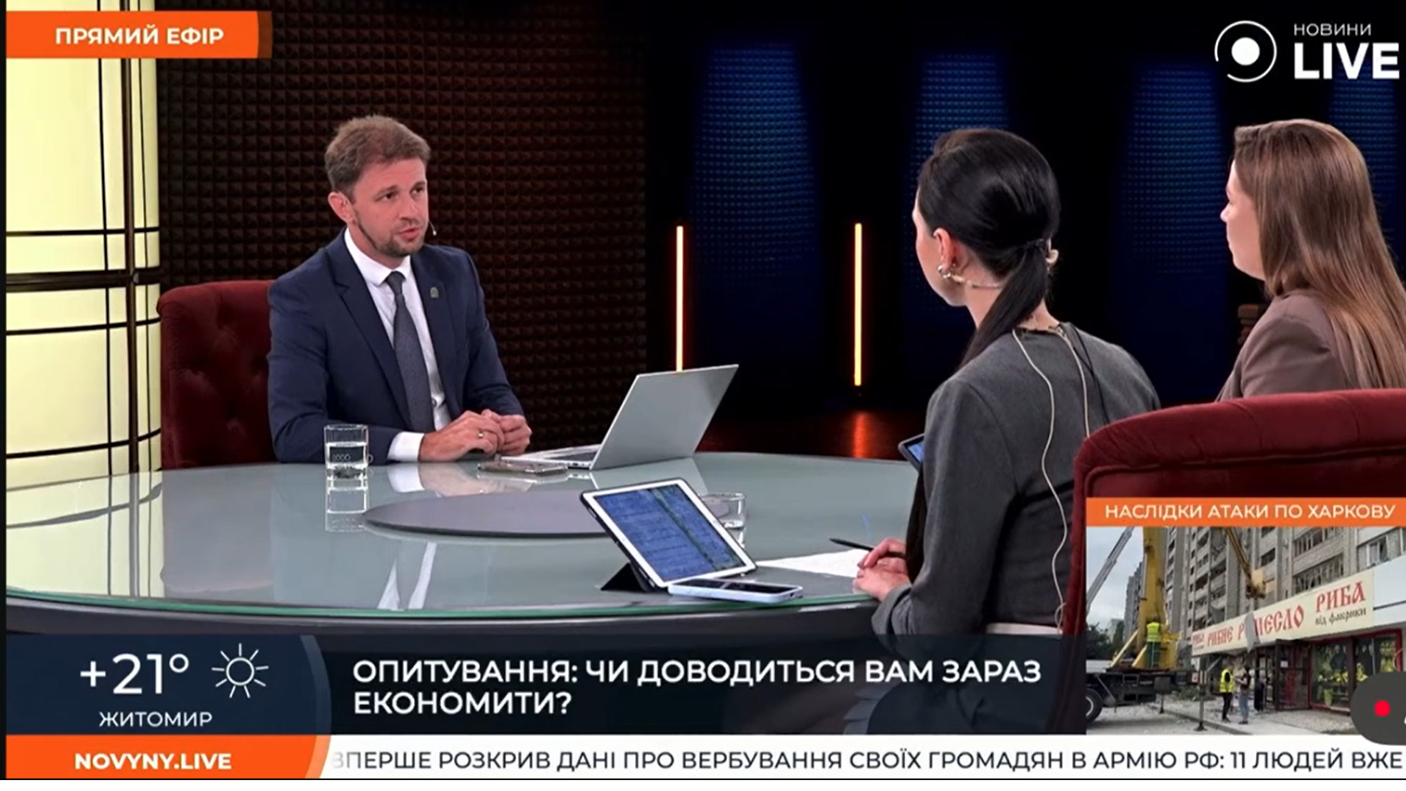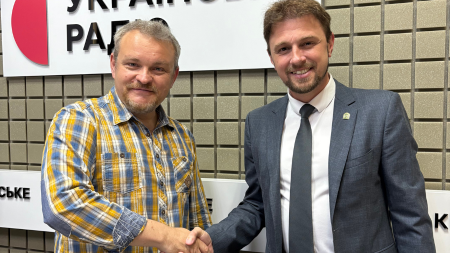

As part of the special project “See You Tomorrow,” organized by Hromadske Radio and the Association of Ukrainian Banks, Oleksandr Kholod, director of ShvidkoGroshi, spoke about the transformation of the consumer lending market, new requirements for financial companies, the role of credit history, and changes in customer behavior.
According to Oleksandr Kholod, the Ukrainian lending market is gradually moving toward models that have long been in place in developed countries, where credit history is one of the key indicators of a person’s financial reliability.
“You need to build your credit history in advance and gradually. We know of many examples in the U.S. where people take out loans even when they don’t need them, just to build their credit history. A person without loans is viewed with suspicion. But in our mindset and in our country, that’s a normal person,” noted Oleksandr Kholod.
He emphasized that what matters most is not the fact of obtaining a loan itself, but the responsible fulfillment of the financial obligations undertaken.
“It’s important to look not at the financial institution that issued the loan, but at how the client handled their obligations. Did they make payments on time, or were there any late payments? That’s what builds trust in a person as a borrower,” he emphasized.
During the conversation, special attention was paid to the reforms that have transformed the microcredit market in recent years. According to the director of ShvidkoGroshi, setting the maximum interest rate at 1% per day posed a serious challenge for all market participants and forced companies to reevaluate their business models.
“For us and for the entire market, this was a very serious challenge. We reviewed all internal processes, restructured our scoring systems and creditworthiness assessment systems, and made them significantly more rigorous. It was an evolutionary step in the development of our business,” noted Oleksandr Kholod.
At the same time, the new rules have also influenced customer behavior. Whereas microloans were previously mostly taken out for short periods, borrowers are now increasingly opting for longer-term products and planning their finances more responsibly.
“Customers’ loan usage patterns have changed. They’ve started using them for longer periods. Whereas the average loan amount used to be around 4,200 hryvnias, today it’s already 6,500–7,000 hryvnias. We’ve also started issuing loans for longer terms—two, three, six, and even nine months,” he explained.
According to Oleksandr Kholod, one of the most significant outcomes of the reforms has been an increase in accountability among both lenders and borrowers.
“People have become more knowledgeable and more responsible when it comes to their financial relationships. We are seeing that the culture of fulfilling credit obligations is gradually changing for the better,” the company’s director emphasized.
He also noted the positive impact of the new legislation on the operating standards of collection agencies and consumer protection.
“We were very pleased that the entire market would begin to operate with respect for the client, with a more measured approach and without unnecessary emotions. If a person is facing financial difficulties, we need to find ways to solve the problem, not create additional stress for them,” noted Oleksandr Kholod.
The podcast also discussed the regulator’s role in shaping a civilized financial market. According to the director of ShvidkoGroshi, the National Bank’s stricter requirements marked an important stage in the industry’s development.
“When the regulator reforms the market and makes it more demanding in terms of transparency, financing structure, and reputation, it always causes some discomfort for businesses. But it’s like growing up. Change always involves working on oneself,” he emphasized.
Summing up the conversation, Oleksandr Kholod stressed that modern consumer lending must be based on transparent rules, predictability, and trust between the client and the financial institution.
The full episode of the podcast is available on the resources of Hromadske Radio and the Association of Ukrainian Bank.