
In 2026, the issue of energy independence is once again coming to the forefront for Ukrainians. It is no longer just a matter of comfort, but of basic household security: the ability to have electricity, communication, water, heating, and access to essentials even during power outages. That is precisely why the update to the state program
“Energy Independence for Individuals—Homeowners” could significantly boost public interest in such solutions in the coming months.
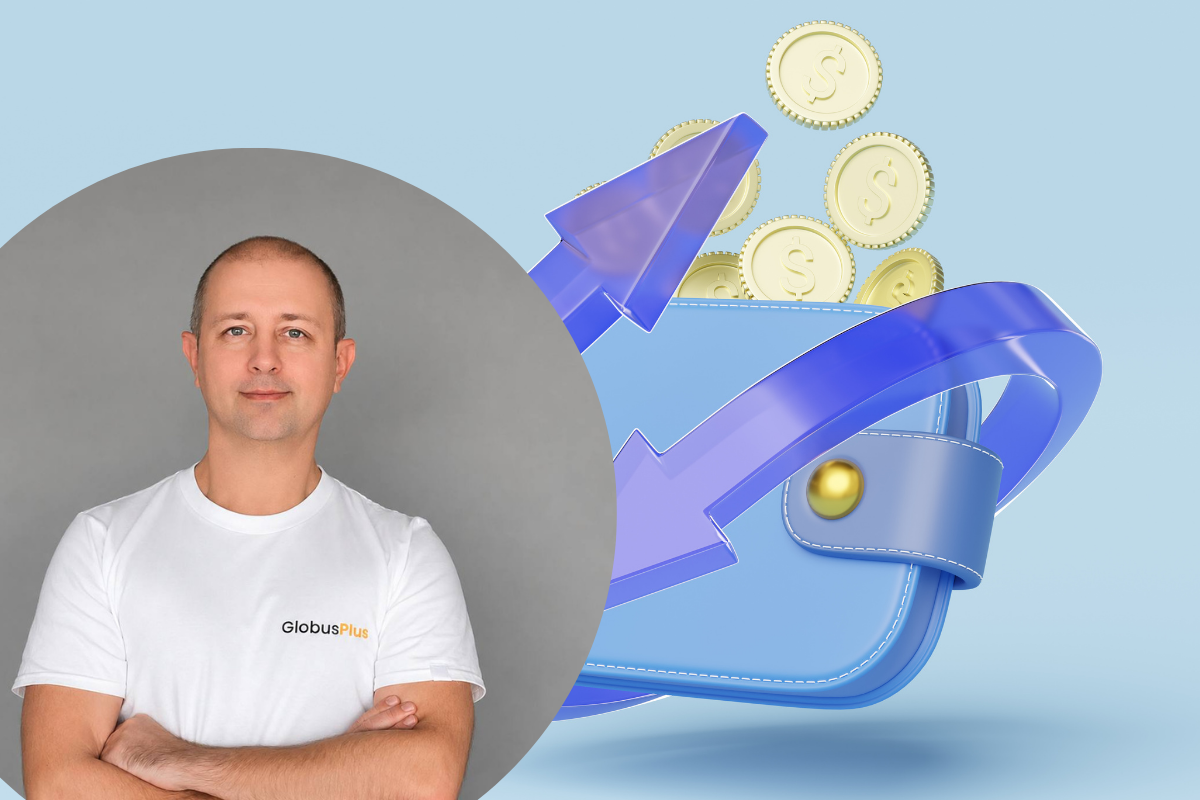
Dmytro Zamotayev, Director of the Retail Business Department at GLOBUS BANK, explained that the program’s new terms effectively make energy loans a more accessible and practical tool for households seeking to protect themselves from potential power outages.“Today, an energy loan is a tool for household resilience, personal comfort, and daily life. For many families, this is a great opportunity to equip their homes with backup or off-grid power right now on much more favorable terms than if they were to purchase everything at their own expense without government support,” the banker noted.
In March 2026, as part of the state program “Energy Independence for Individuals—Homeowners,” the terms of preferential loans for households were expanded through the inclusion of generators (diesel, gasoline, gas, or dual-fuel), which are a significantly cheaper alternative to solar power plants for households.
Another significant advantage is increased government support. The government subsidizes the interest rate for the borrower during the first three years of the loan: in the first year, the rate for the borrower is 0% per annum; in the second, 5% per annum; in the third, 7% per annum; and starting from the fourth year, the customer pays the full loan rate, which is variable and determined by the formula UIRD3m+7%. In addition, after purchasing and installing the equipment, the borrower may receive additional compensation for a portion of the loan amount—ranging from 20% to 30%, depending on the type of equipment purchased.
According to Dmytro Zamotaev, the combination of these factors makes the program particularly attractive to citizens: it offers a minimal loan burden in the early years, the ability to avoid a large one-time payment from the family budget, and a real chance to receive partial reimbursement of the system’s cost after its installation.
“In effect, the government is creating conditions under which families can invest in energy independence gradually, without placing excessive strain on their household budgets. This is particularly important right now, as a home’s energy resilience is shifting from a ‘nice-to-have’ to a ‘must-have,’” the expert emphasized.
What the updated program entails
The loan is provided for a term of up to 10 years, with no down payment. The financing amount is up to 480,000 UAH.
The program applies exclusively to equipment for private homes. This mechanism does not apply to apartments. The borrower can only be the owner or co-owner of a private home, and the living area where the equipment is to be installed must not exceed 300 m².
There is also an income requirement: the borrower’s and their spouse’s average monthly combined income over the past 6 months must not exceed ten times the average salary in Ukraine, according to official data from the State Statistics Service and/or the Pension Fund. As of March 1, 2026, the average salary, according to the State Statistics Service, was 28,321 UAH, and therefore the maximum average monthly income for participation in the program is 283,210 UAH.
Why Now Is the Right Time to Take Advantage of Energy Loans
According to Dmytro Zamotaev, interest in the program will grow not only because of improved financial terms but also due to seasonal factors. The period from April to June may become one of the busiest for applying for such loans, as Ukrainians are increasingly preparing not only for winter but also for summer risks to the power grid.
“A hot summer also places a serious strain on the damaged power grid. Therefore, preparation for possible power outages is no longer distinctly seasonal. Some customers traditionally become more active before fall and winter, but this year we expect demand to start earlier: as early as April and throughout the second quarter,” he noted.
According to his estimates, thanks to the updated terms of the state program, the number of loans issued could increase by 30–40% as early as the second quarter. The greatest demand will likely be for generators, as they are the fastest and technically simplest solution for backup power in a private home. It is expected that loans specifically for generators could account for about 60–65% of the total number of loans issued to households.
The banker also noted that demand will continue to grow because an increasing number of people are beginning to view energy equipment not as a one-time expense, but as a long-term investment in their own self-sufficiency. This is particularly true for integrated systems that combine multiple power sources and help reduce dependence on external power outages.
Dmytro Zamotaev also noted that since July 20, 2024, when the government’s energy independence program launched, GLOBUS BANK has issued 80 loans totaling over 33 million UAH. Over the past 1.5 years, the outstanding balance on these loans amounts to 24.6 million UAH. In other words, 25% of the loans have been fully repaid.
How to Get a Loan: A Step-by-Step Guide
To take advantage of the program, you first need to determine exactly what equipment you plan to purchase: a generator, an energy storage system, solar panels, or a comprehensive solution for off-grid home power.
Next, you need to obtain a document from the seller or contractor confirming the cost of the equipment and its installation. This can be a contract, an invoice, or another billing document.
After that, you need to prepare your personal documents, proof of income, and property documents, and contact a bank participating in the program to submit a loan application. Once approved, the funds will be used to purchase and install the selected system.
Important Steps to Take After Installing the Equipment
After installation, the system must be officially certified as installed and commissioned. To do this, you must submit:
a certificate of completion or other similar document;
photographic evidence of the installed hybrid power supply system with geolocation;
data on electricity consumption from the consumer’s personal account.
If these documents are not submitted by the deadline, the borrower loses the right to state support and will be required to return all funds received under the program.
Tips for borrowers: how to take advantage of the program without unnecessary difficulties
According to Dmytro Zamotaev, to ensure that the loan application and receipt of state compensation proceed smoothly, it is worth following a few basic rules.
First and foremost, do not rush into choosing equipment without first calculating your home’s needs. It is important to understand exactly what the system is needed for: solely as a backup power source in case of outages, or for partial or full energy self-sufficiency.
It is also worth checking in advance whether the chosen solution meets the program’s requirements and whether all documents from the seller or contractor are properly prepared. Special attention should be paid to the post-installation phase: after all, late submission of supporting documents can often result in the loss of eligibility for state support.
“The most important thing is, first and foremost, the opportunity to systematically prepare your home for potential future energy challenges. If you approach the selection of equipment thoughtfully, complete the paperwork correctly, and meet all the program’s requirements, this investment will ensure your family’s comfort, safety, and stability for many years to come,” concluded Dmytro Zamotaev.
JOINT-STOCK COMPANY “COMMERCIAL BANK “GLOBUS” (GLOBUS BANK) was founded in 2007.
As of April 2026, the regional network comprises 34 branches, 29 of which are part of the Power Banking network, enabling operations during power outages.
GLOBUS BANK has been assigned the highest credit rating on the national scale at uaAAA, as well as a deposit rating of ua2+ on the scale of the rating agency “Expert-Rating.”The bank’s priority areas of activity include financing energy-efficient projects, mortgage lending in the primary market, auto loans, and lending to small and medium-sized businesses.
GLOBUS BANK is an accredited partner of a number of government programs: the state mortgage program “eOselya,” the “5-7-9” preferential lending program for small and medium-sized businesses, “Affordable Factoring,” “Affordable Financial Leasing 5-7-9,” and “Energy Independence for Individuals—Homeowners.”
The Bank is a partner of the State Agency “Energy Efficiency Fund” under the “Energodim” and “GreenDIM” lending programs for condominium associations and housing cooperatives.
The Bank participates in the state program “National Cashback.”
On June 25, 2024, GLOBUS BANK became one of the 17 largest Ukrainian banks to sign a Memorandum on lending for energy infrastructure restoration projects.
Serhiy Mamedov, Chairman of the Board of GLOBUS BANK, is Vice President of the Confederation of Builders of Ukraine and Vice President of the Association of Ukrainian Banks.