
Despite the NBU’s decision to leave key monetary policy parameters unchanged, banks may begin gradually adjusting the interest rates on hryvnia deposits in the coming months in order to boost lending.
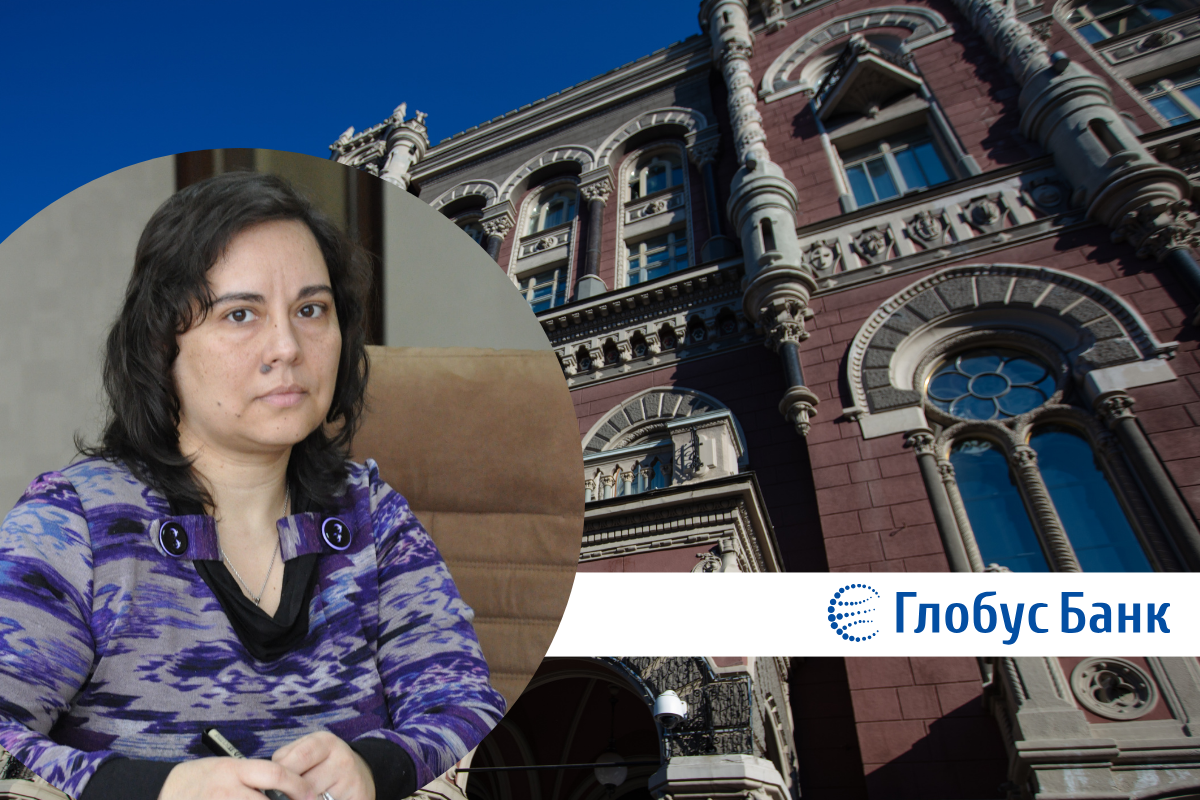
This view was expressed by Dmytro Zamotaev, Director of the Retail Business Department at GLOBUS BANK.
According to him, the deposit market is entering a phase of gradual rate adjustments: over the next one to two months, average rates may decline by up to 0.5 percentage points. By the end of spring, the average rate is expected to range between 12.5% and 14% per annum, with a maximum of 15.5%.
“A new ‘systemic’ stage in the development of the deposit market is effectively beginning now. Rates may gradually adjust, and this is a natural process to a certain extent. Banks are responding more and more carefully to the overall economic situation, inflation expectations, the state of the foreign exchange market, and depositors’ real demand for hryvnia-denominated instruments. The main thing is to maintain the real yield on deposits. If inflation slows down and the hryvnia remains strong, even adjusted rates will not prevent potential depositors from earning income while preserving the purchasing power of their funds,” explained Dmytro Zamotaev.
What Will Determine Deposit Growth in the Second Quarter
One of the key factors remains the overall state of the country’s economy, particularly the relationship between interest rates and the actual economic situation, including inflation.
“The state of the Ukrainian economy can be described as overly ‘sensitive’ to external circumstances, such as the war in the Middle East. After all, it triggers a rise in the cost of fuel and lubricants, which is highly undesirable during the planting season. And the ‘chain’ of potential price changes is quite extensive: from the cost of food, logistics, and other services linked to fuel prices—for example, the operations of small and medium-sized businesses that rely on generators during power outages.
According to the expert’s forecast, the returns on hryvnia deposits will at least offset any potential rise in consumer prices.
Another important factor that could influence the growth of deposits is the situation in the foreign exchange market. Relative exchange rate stability reduces anxiety and boosts public confidence in hryvnia-denominated savings instruments.
“We understand that exchange rates can both encourage and deter potential depositors. And in conditions where a ‘hybrid’ system operates in the foreign exchange market (‘managed flexibility’ regime), all fears of sharp exchange rate fluctuations are unfounded. The National Bank has ample tools to balance supply and demand, thereby protecting the foreign exchange market from unwanted exchange rate volatility. “In any case, the exchange rate will be based on economic factors: the lower the inflationary pressure, the more stable the exchange rate will be,” the expert believes.
At the same time, military risks remain a difficult-to-predict factor that primarily acts to “deter” citizens’ intentions to take advantage of deposit offers banks. According to Dmytro Zamotaev, it is emotionally quite difficult to adapt to constant enemy shelling while planning one’s future. And the intense situation on the front lines is a powerful additional source of psychological stress, which may keep citizens’ attention firmly focused on the struggle for survival. That is why, he suggests, short-term deposits—which allow funds to be indexed to inflation in a short period—may become the most sought-after option in the second quarter.
“The security component hasn’t gone anywhere: war is a powerful factor that hinders people’s intentions in all areas related to well-being. Therefore, it is possible that developments on the front lines and the consequences of enemy airstrikes will only increase the importance of short-term deposits, as this is also a good opportunity to protect and grow one’s funds,” the banker suggested.
He is convinced that if the currency market remains predictable and the economy shows gradual growth, this will give people confidence. Deposits will be viewed not only as a way to preserve funds during a period of uncertainty, but as a tool for planning, saving, and even generating passive income.
The banker emphasized that, as was the case throughout 2025, the most profitable deposits in the second quarter will be those with terms of 6–9 months and 1 year. According to his forecast, banks will be ready to offer the highest rates on precisely these types of deposits.
“According to forecasts by the NBU and the government, inflation will not exceed 7.5% by the end of the year. This means that placing funds for 6–9 months or one year allows you not only to preserve their purchasing power but also to potentially earn additional income in the range of 3–4%,” notes Dmytro Zamotaev.
How to Make an Informed Decision as a Depositor
The banker advises approaching the placement of funds without emotion or undue haste.
“First and foremost, you should honestly ask yourself: will you need this money during the term of the deposit? If there is a chance that the funds might be needed sooner, it’s better to take a break or invest only a portion of your available savings. Keep in mind that early termination of the agreement often means losing interest,” the banker explained.
In his opinion, it is also important to consider not only the maximum rate “advertised” but also the additional terms of the deposit: how interest is calculated (frequency), whether there are bonuses for online sign-up, whether the deposit can be replenished, and so on.
A separate trend is customer convenience. More and more people are opening deposits via mobile apps, without visiting a branch in person. This saves time and can sometimes be beneficial for the depositor due to additional bonus interest on top of the base rates.
And, of course, it’s worth clarifying the terms for early termination or partial withdrawal of funds: flexibility is sometimes just as important as the yield itself.
“In the second quarter, the deposit market may enter a phase of gradual rate declines. At the same time, under conditions of controlled inflation and relative currency stability, hryvnia deposits will retain their real appeal and remain one of the most predictable and profitable savings instruments,” concluded Dmytro Zamotaev.
Report from the Center for Economic Research and Forecasting “Financial Pulse”
As of January 1, 2026, the total volume of deposits held by individuals in Ukrainian banks amounted to UAH 1,596 billion. Of this amount, nearly 66% were deposits in hryvnia. Foreign currency deposits account for 34% of the total deposit volume. Of these, 71.5% are deposits in U.S. dollars, about 27.8% are in euros, and less than 0.7% are in other currencies.
The volume of government bonds held by individuals stood at 115.9 billion UAH as of early February. Of this amount, bonds denominated in hryvnia accounted for 59%.
When analyzing the overall structure of individuals’ savings, deposits in the national currency account for the largest share—61.5%—while deposits in foreign currency rank second at 31.7%. Investments in OVDPs account for 6.8% of the total volume of individuals’ non-cash savings.
JOINT-STOCK COMPANY “COMMERCIAL BANK ”GLOBUS” (GLOBUS BANK) was founded in 2007.
As of March 2026, the regional network comprises 34 branches, 29 of which are part of the Power Banking network, enabling operations during power outages.
GLOBUS BANK has been assigned the highest credit rating on the national scale at uaAAA, as well as a deposit rating of ua2+ on the scale of the rating agency “Expert-Rating.”
The bank’s priority areas of activity include lending for energy-efficient projects, mortgage lending in the primary market, auto loans, and lending to small and medium-sized businesses.
GLOBUS BANK is an accredited partner of a number of government programs: the state mortgage program “eOselya,” the preferential lending programs for small and medium-sized businesses “5-7-9,” “Affordable Factoring,” “Affordable Financial Leasing 5-7-9,” “Energy Independence for Individuals—Homeowners.”
The Bank is a partner of the State Agency “Energy Efficiency Fund” under the “Energodim” and “GreenDIM” lending programs for condominium associations and housing cooperatives.
The Bank participates in the state program “National Cashback.”
On June 25, 2024, GLOBUS BANK became one of the 17 largest Ukrainian banks to sign a Memorandum on lending for energy infrastructure restoration projects.
Serhiy Mamedov, Chairman of the Board of GLOBUS BANK, is Vice President of the Confederation of Builders of Ukraine and Vice President of the Association of Ukrainian Banks.