
The Board of the National Bank of Ukraine (NBU) has decided to keep the key policy rate unchanged at 15% per annum.
The NBU explained that the current monetary conditions remain sufficiently tight to contain inflation, support demand for hryvnia-denominated savings, and maintain stability in the foreign exchange market.
At the same time, the regulator emphasized that it is prepared to raise the policy rate if necessary. Such a step may be taken if there is a risk of rising inflation expectations or if inflation deviates from the trajectory required to return to the target level of 5%.
Inflation Has Slowed, but Price Pressures Persist
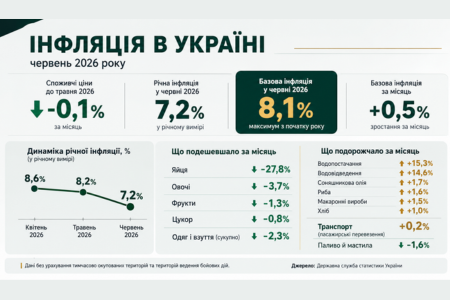
According to the National Bank, annual inflation eased to 8.2% in May, in line with the regulator’s expectations. The main factor behind the slowdown was an increase in the supply of raw food products. However, core inflation accelerated to 7.9%, exceeding forecasts due to the secondary effects of previous increases in energy prices.
The NBU noted that inflation is likely to remain close to current levels in the coming months. By the end of 2026, it may temporarily accelerate due to rising business costs, higher energy prices, and wage growth driven by labor shortages. Inflation is expected to resume a steady decline in 2027.
External Financial Assistance to Support the Economy
The National Bank expects sufficient international financial support to cover the budget deficit and replenish international reserves. Although external financing during the first five months of the year was lower than expected, Ukraine may receive approximately USD 13 billion in June alone.
Cooperation with the International Monetary Fund (IMF) remains an important factor. Reaching a staff-level agreement under the Extended Fund Facility (EFF) program paves the way for further financing and supports the country’s macro-financial stability.
War Remains the Main Risk
The NBU emphasized that Russia’s full-scale invasion remains the primary threat to the economy and inflation outlook. Russian attacks on energy, industrial, and logistics infrastructure continue to pose risks to business activity and increase costs for Ukrainian companies.
Other risks identified by the regulator include the possibility of higher budgetary needs for defense and reconstruction, as well as a worsening labor shortage, which could push wages and prices upward.
The National Bank also highlighted developments in the Middle East. Although the risk of escalation has somewhat decreased recently, a prolonged conflict in the region could lead to another increase in energy prices and stronger inflationary pressures.
Why the Policy Rate Was Left Unchanged
According to the regulator, the stabilization of oil prices, expected growth in external financing, and sustained demand for hryvnia-denominated assets currently allow the policy rate to remain at 15%.
The NBU believes that its current monetary policy effectively supports the attractiveness of hryvnia savings instruments, limits pressure on the foreign exchange market, and at the same time promotes further growth in lending activity.
The National Bank’s next decision on the key policy rate will be made on July 30, 2026. It will take into account the updated macroeconomic forecast and further developments in inflation-related risks.