
In the second quarter, the situation in the banking sector will depend primarily on overall economic indicators (including international financial aid), as well as on the National Bank’s strategy aimed at supporting the hryvnia and maintaining balance in the foreign exchange market.
This was stated by Serhiy Mamedov, Vice President of the Association of Ukrainian Banks and Chairman of the Board of GLOBUS BANK.
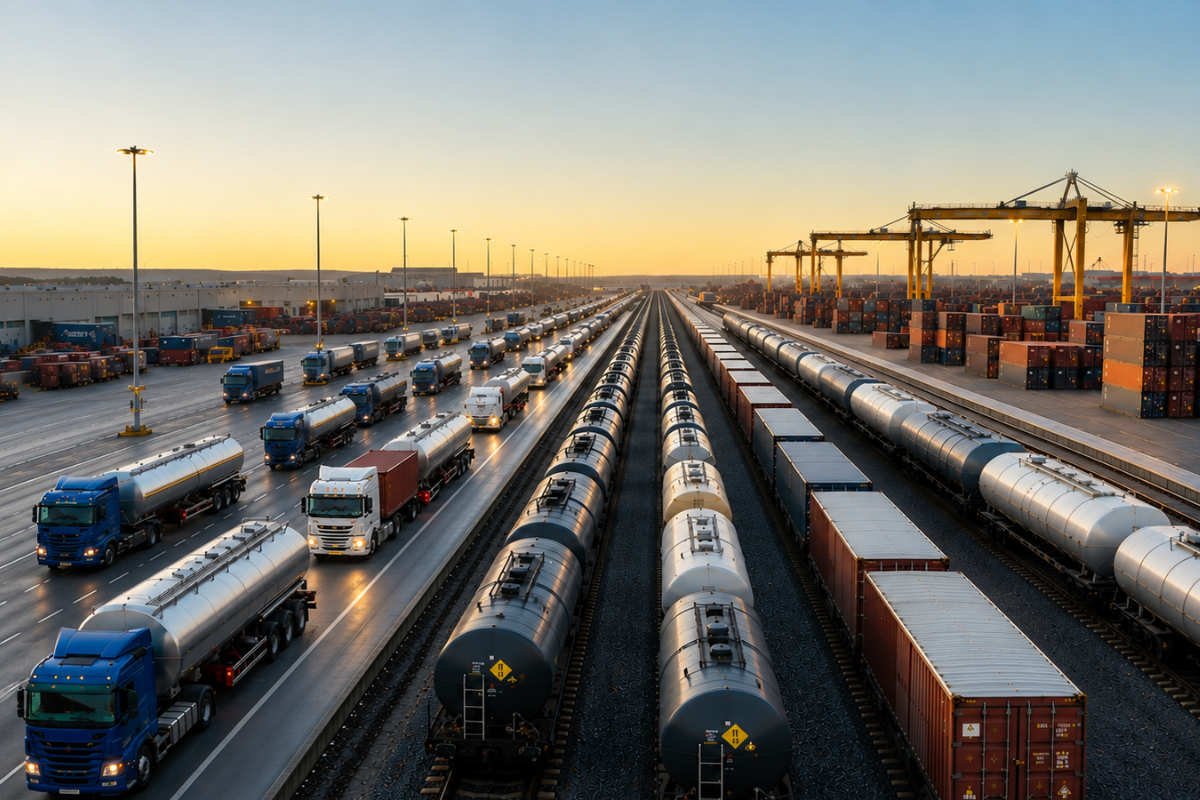
According to the banker, the second quarter may prove challenging not only due to the general uncertainty caused by the war. The situation in the Middle East will also remain a significant external factor, as the new military escalation is already affecting energy prices. This primarily concerns fuel, the cost of which traditionally triggers price increases in Ukraine, as it automatically raises transportation, production, and a whole range of service costs. Regarding inflation, he believes that thanks to timely changes in the National Bank’s monetary policy, price growth will be somewhat curbed.
The banker noted that since early March, inflationary pressure has intensified significantly due to a substantial rise in fuel prices. For instance, during March, the price of A-95 gasoline rose by approximately 14%, while diesel fuel increased in price by more than 36%. That is why he does not rule out that as early as April, the NBU’s Monetary Policy Committee may raise the discount rate to 16%. Such a move should not only curb price pressures but also serve as a significant safeguard against further devaluation of the hryvnia. According to his calculations, in the second quarter, the total inflation rate will not exceed 1.8–2%, which will allow the annual rate to remain within the range of 8–8.5%. He noted that in the second quarter of 2025, consumer prices rose by a total of 2.8%: by 0.7% in April, 1.3% in May, and 0.8% in June.
“Depending on domestic economic and geopolitical factors, inflationary pressures are expected to peak from April through June. While last year the main causes of accelerating inflation lay in rising prices for raw materials, increased demand for food, and the impact of fuel and lubricant costs on consumer prices, this year the main focus will be on fuel prices, as its significant price hike has almost immediately affected price levels,” said Serhiy Mamedov.
At the same time, he emphasized that even if the global situation calms down somewhat, fuel prices will most likely remain at their highest levels in the coming months. After all, the inertia of economic and geopolitical uncertainty is not going anywhere.
“To a certain extent, this can be seen as a ‘hint’ that the economic situation in Ukraine will inevitably take into account not only difficult domestic conditions but also external circumstances. High prices ‘drag’ up the cost of food, logistics, and so on—that’s a given,” noted Serhiy Mamedov.
Another important factor that will influence the state of the economy, in his view, is continued international financial assistance in amounts sufficient to cover the expenditures of the “war” budget. He noted that the 2026 state budget estimates the need for external support at 2.079 trillion UAH, or about $52 billion. At the same time, one of the key sources of such support is expected to be the 90 billion euro loan approved by the European Union for 2026–2027. However, despite the EU’s political decision, this loan remains effectively blocked due to Hungary’s position, creating additional uncertainty for budget planning.
“It is critically important for Ukraine that international financial support be provided regularly, predictably, and in full, as the country’s macrofinancial stability, exchange rate equilibrium, and the government’s ability to meet all priority budgetary obligations in a timely manner depend largely on this,” emphasized Serhiy Mamedov.
As for deposit and loan programs, the banker believes that banks will continue to be guided by the discount rate, which effectively determines the cost of money in the market. At the same time, from a strategic standpoint, the National Bank will likely seek a balance between growing deposits—which reduces pressure on the foreign exchange market—and the need to support lending to the economy.
A potential increase in the discount rate to 16% will also affect the rate on 3-month certificates of deposit, which could rise to 19.5%. This rate will become one of the main benchmarks for shaping commercial banks’ deposit policies. It is expected that average rates, depending on the term of the deposit, may rise to 14.5–15.5%, while the highest offers may once again exceed the 17% per annum mark.
Citing data from the National Bank of Ukraine, he noted that in February, hryvnia deposits held by individuals increased by 1.2%—approximately 4.1 billion hryvnia—reaching nearly 350 billion hryvnia. Of these, nearly 70% are hryvnia deposits, which may indicate a sufficient level of public confidence in hryvnia deposits as a means of preserving funds.
Despite expectations of economically challenging months ahead, the banker advises paying attention to hryvnia deposits, particularly those with terms of 6–9 months and 1 year. According to him, it is precisely these deposits that will allow citizens to earn optimal returns, significantly outpacing inflation forecasts.
“According to preliminary estimates, hryvnia deposits will not only be able to index citizens’ savings but will also provide the opportunity to earn passive income at a rate of 3–4%,” said Serhiy Mamedov.
As for lending, the banker believes that commercial banks will focus primarily on maintaining current interest rates while actively expanding partnership programs with manufacturers and suppliers of essential business equipment. He noted that such programs already account for about 60–65% of the total number of loans in the lending portfolio. Their “philosophy” is that interest rates on these loans are 1–2 percentage points lower than the market average.
“Of course, accelerating inflation is always a challenge, first and foremost for lending. After all, Ukrainian businesses are currently in a state of war and total uncertainty and are barely able to ‘handle’ rates higher than 20–22% per annum. That is precisely why banks will be more actively seeking mutually beneficial partnerships with manufacturers and suppliers of commercial vehicles, machine tools, and other business equipment to offer rates that do not exceed 17–18% per annum,” he believes.
Another factor driving the growth of lending will be the effective implementation of a number of government programs, such as “eOselya,” as well as energy efficiency programs for households, small and medium-sized businesses, and homeowners’ associations, which offer unsecured loans at 0% interest for the first year of the loan.
“Government lending programs, on the one hand, stimulate the growth of lending, as the state assumes the lion’s share of the credit burden, and on the other hand, they offer a solution to citizens’ urgent needs regardless of prevailing economic conditions. That is why, in the second quarter, lending will be supported both by partnership programs between banks and manufacturers of essential business equipment, as well as by government credit programs,” emphasized Serhiy Mamedov.
According to the banker, in the second quarter, the situation on the foreign exchange market will remain more or less predictable from a strategic perspective, and exchange rate fluctuations will not come as a shock to the public. First and foremost, the expert asserts, thanks to the current “managed flexibility” regime, the National Bank, as the main player in the foreign exchange market, will be able to effectively address any imbalances on the demand side. In particular, currency intervention mechanisms could be actively employed, with a volume of $3–3.5 billion per month.
At the same time, in his view, the saturation of the market with currency will depend primarily on current threats to exchange rate stability, the level of current inflation, and the volume of international reserves.
“It is already clear that the currency market will face pressure from economic and geopolitical circumstances, which almost always increase demand for foreign currency. However, one should not expect exchange rates to suddenly spike upward or just as unexpectedly plunge into an ‘exchange rate abyss.’ “The National Bank will closely monitor the situation and will be ready to act in accordance with the circumstances,” emphasized Serhiy Mamedov.
He anticipates that from April through June, the hryvnia may weaken by 3.2–4%, which can be attributed to volatility in energy prices as well as underlying economic trends. According to his forecast, during the second quarter, the official dollar exchange rate will fluctuate in the range of 44–45.5 UAH, and the euro—in the range of 51–52.5 UAH.
The expert advises citizens, if possible, to refrain from panic-buying foreign currency. First, there is no cash shortage. Second, given their returns, hryvnia deposits can be a viable alternative to foreign currency savings. And third, at the peak of exchange rate volatility, the risk of losing part of your investment increases significantly: exchange rate losses can reach up to 5% of the equivalent amount spent, since the buying rate is always higher than the selling rate.
“Ukraine operates under a ‘managed flexibility’ regime, which is optimal in wartime conditions, as it dampens any signs of panic and aims to achieve a balance between supply and demand. However, let’s be honest—exchange rates cannot mask broader economic trends. Therefore, the exchange rate situation will not develop in isolation from the economy. In other words, the National Bank will not keep the exchange rate on a speculative “leash” nor will it hide the impact of price pressures. However, one should not expect the regulator to let the market run wild, leaving exchange rates in an uncontrolled state. At the same time, the active growth of deposits, whose returns will more than offset inflation, will make it possible to “curb” any potential currency panic. “Confidence in the hryvnia—that is what is important for economic progress right now,” concluded Serhiy Mamedov.
GLOBUS COMMERCIAL BANK (GLOBUS BANK) was established in 2007.
As of April 2026, the regional network comprises 34 branches, 29 of which are part of the Power Banking network, enabling operations during power outages.
GLOBUS BANK has been assigned the highest credit rating on the national scale at uaAAA, as well as a deposit rating of ua2+ on the scale of the rating agency “Expert-Rating.”
The bank’s priority areas of activity include lending for energy-efficient projects, mortgage lending in the primary market, auto loans, and lending to small and medium-sized businesses.
GLOBUS BANK is an accredited partner of a number of government programs: the state mortgage program “eOselya,” the preferential lending programs for small and medium-sized businesses “5-7-9,” “Affordable Factoring,” “Affordable Financial Leasing 5-7-9,” “Energy Independence for Individuals—Homeowners.”
The Bank is a partner of the State Agency “Energy Efficiency Fund” under the “Energodim” and “GreenDIM” lending programs for condominium associations and housing cooperatives.
The Bank participates in the state program “National Cashback.”
On June 25, 2024, GLOBUS BANK became one of the 17 largest Ukrainian banks to sign a Memorandum on lending for energy infrastructure restoration projects.
Serhiy Mamedov, Chairman of the Board of GLOBUS BANK, is Vice President of the Confederation of Builders of Ukraine and Vice President of the Association of Ukrainian Banks.